
US Soccer Supporters Culture: How the Crowds Work
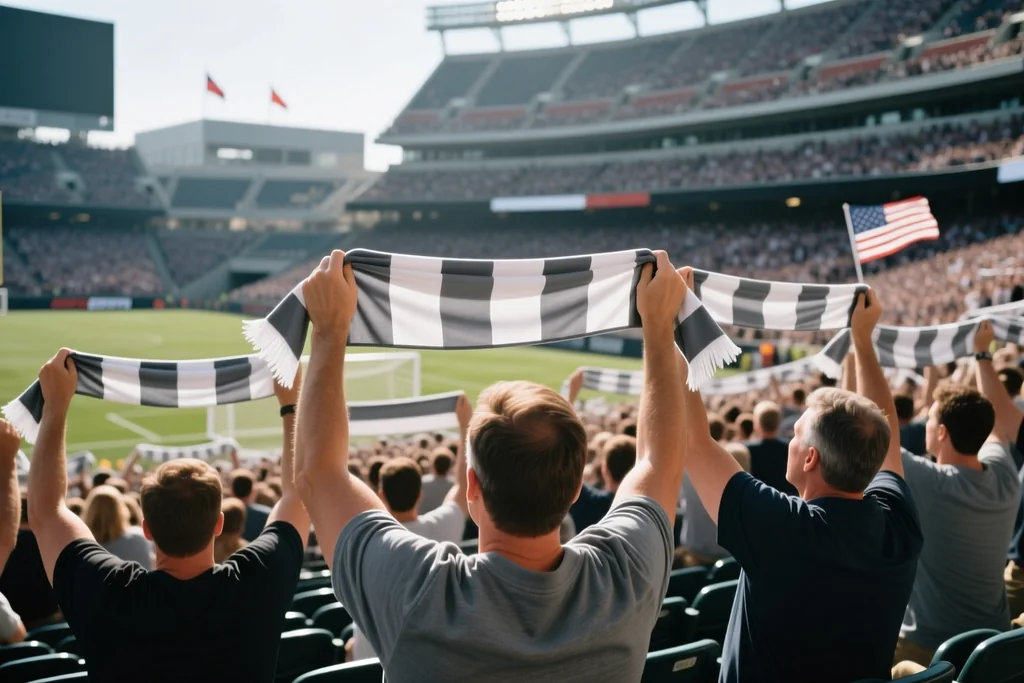
US soccer supporters culture has been built deliberately rather than inherited, and almost everything visible in the stands on a matchday was organised by somebody. The drum line, the banners, the capo stand and the singing that carries for ninety minutes all come from volunteer work. Here is how those sections operate.
Understanding how those sections work explains a great deal about the atmosphere at an professional match in the United States, why some groups are louder than others, and why the culture keeps spreading between cities.
The capo and the drum line
A capo stands at the front of the section, facing the crowd rather than the pitch, and leads the singing with a megaphone and hand signals. The job exists because a group of several hundred people cannot start a song at the same moment without a cue, and a section that starts together stays together.
The drum line sets the tempo and gives the section a heartbeat to follow. Two or three drums are usually enough; more than that and the sound turns into noise rather than rhythm, which is why the arrangement is coordinated in advance rather than improvised on the night.
Both roles are volunteer work. Nobody is paid, nobody is a club employee, and the people doing it frequently arrive hours before kickoff to set up equipment that will be taken down again after the final whistle.
What supporters bring and why
The visible kit of an American supporters section is a scarf, a plain shirt in club colours and a banner that can be held overhead. Scarves are raised during specific songs, which is why they appear in almost every photograph of a loud section.
Banners are usually the product of weeks of work by a small group. They are designed for a specific fixture, funded by collection among members and cleared with the club and the stadium on safety and size grounds before they are allowed in.
The cleared display is the part outsiders never see. Fire regulations, sightline rules and broadcast restrictions all apply, and a group that ignores them loses the privilege of bringing anything at all.
US soccer supporters groups: how a section organises itself
| Role | Responsibility | Typical timing |
|---|---|---|
| Capo | Starts songs, keeps tempo, reads the crowd | From thirty minutes before kickoff |
| Drum line | Sets rhythm for the whole section | Warm-ups to final whistle |
| Banner crew | Unfurls and secures displays safely | Kickoff and half time |
| Tifo organisers | Design, funding and clearance | Weeks before the fixture |
| Travel leads | Buses, tickets and away allocations | Two to four weeks out |
Every one of those roles is filled by members rather than staff, and most groups actively recruit for them. The practical entry point for a newcomer is usually the banner crew, because it needs hands rather than experience.
How the culture varies between cities
- Some sections stand for the full ninety minutes; others sit and join the songs.
- Drum-heavy groups produce constant noise; others rely on short, sharp chants.
- Some clubs reserve a section behind the goal; others place it along the side.
- Travel culture is stronger where the club draws supporters from a wide region.
- Some groups coordinate with the club, others keep a deliberate distance.
None of those differences make one section more authentic than another. They reflect the size of the stadium, the history of the group and, frequently, the number of people prepared to turn up an hour early every week.
Etiquette in the stands
Two rules matter more than any other. Respect the people around you, and do not sit in a section whose culture you are not prepared to join. A supporters section is a place where standing and singing is the norm, and it is understood as such by everyone who buys a ticket there.
Newcomers who want a quieter afternoon should choose a different part of the ground rather than ask a section to change. Clubs usually list the loud sections clearly on their ticketing pages, and the preview advice in the matchday ticket guide covers how to pick one.
US soccer fans: how new groups start
Almost every established supporters group began with a handful of people meeting in a bar. The group grows when the club grows, and the structure usually appears later, once the work becomes too large for a small circle.
The first practical step is a name and a banner. The second is a decision about whether to organise independently or work within the club, which shapes everything that follows.
Where the culture is heading
The scene is still developing, and it is developing fast. Groups now coordinate nationally, share designs and travel together for the national team away days, which has created a shared vocabulary across cities that did not exist a decade ago.
What has not changed is the labour behind it. Every loud section in the country is the product of a small number of people doing unpaid work, and that is worth remembering the next time the noise travels across a stadium.
Read next
USMNT Away Days: Travel Culture and Supporters
The away end is the smallest part of a USMNT matchday abroad and the loudest thing in the ground. Getting there is a project in itself.
2026-09-18
Rivalries in American Soccer: What Drives Them
American soccer rivalries run on geography and repetition. The best ones have both, plus a playoff night that neither city has forgotten.
2026-09-06
MLS Supporters Groups and Tifos: How Displays Work
A tifo is weeks of unpaid work, a fire-safety conversation and about forty seconds of impact. The people who make them explain the process.
2026-08-31