
Supporter Groups and Tifos in American Soccer

A tifo is the most expensive and least durable thing a supporters group produces. Weeks of design, hundreds of dollars of fabric and paint, and a stadium clearance process that can reject the whole project on the morning of the match, all for a display that is visible for perhaps forty seconds.
Understanding how those displays are made explains a lot about the culture around soccer in the United States, why some clubs have better stands than others, and why the work is almost always volunteer.
What a tifo actually is
The word covers any coordinated visual display in a stadium: a large overhead sheet, a card mosaic across a section, a two-pole banner, or a combination of all three. The common factor is coordination, because the effect depends on hundreds of people doing the same thing at the same moment.
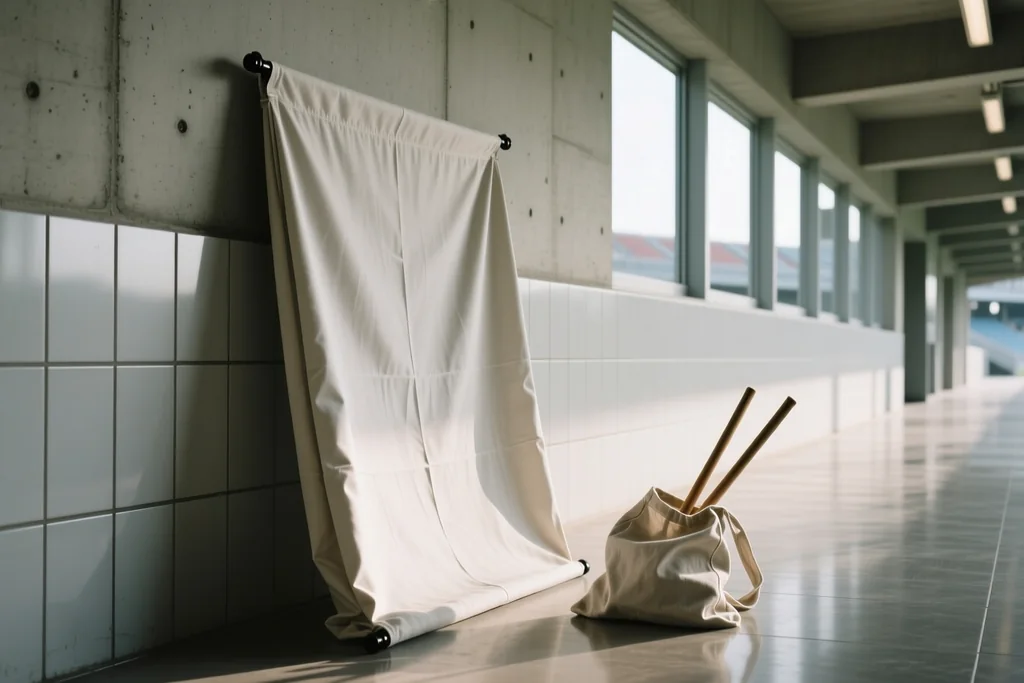
Overhead sheets are the most ambitious. They are painted on fabric wide enough to cover a section, sometimes thirty metres across, and they have to be rolled, transported, unfurled and pulled down without tearing or blocking a fire exit.
Card mosaics are the cheaper alternative. Each supporter receives a coloured card on their seat, and the design appears when everyone holds it up. The effect works best in a full section with an unobstructed view from the rest of the ground.
How a display gets designed and funded
Designs are usually agreed by a small committee months before the fixture. The rule that governs almost every choice is legibility: if a design cannot be read from the opposite stand, it will not be worth the money it cost.
Funding comes from member contributions, merchandise sales and occasional collections. A large overhead sheet can cost several thousand dollars once fabric, paint and transport are counted, and no club pays for it.
Clearance is the step that decides whether any of it reaches the stadium. Clubs and stadium operators require advance notification, restrict what can be carried in, and apply fire-safety rules to fabric, poles and any pyrotechnic ideas supporters may have raised.
What makes a display work on the night
| Display | Cost and effort | Main risk |
|---|---|---|
| Card mosaic | Low, placed on seats | Late arrivals who do not take part |
| Overhead sheet | High, weeks of painting | Tearing or a delayed unfurl |
| Two-pole banner | Low, easy to carry | Length limits at the gate |
| Flags across a section | Medium, needs many hands | Sightlines for the row behind |
| Full-section display | Very high, needs the whole stand | Coordination failure at kickoff |
The timing is what separates a good display from a waste of money. A sheet that opens during the walkout is remembered; the same sheet opened two minutes late is invisible to half the ground.
The etiquette that keeps it possible
- Notify the club in advance and respect the size and material limits.
- Never block a gangway, a fire exit or a wheelchair platform.
- Avoid anything that could be read as a slur, a threat or a political message.
- Take the display down cleanly and leave no litter in the section.
- Credit the people who paid for it, usually in the group programme.
Groups treat those rules as the price of access. A section that damages a display or blocks a walkway loses the ability to bring anything in at all, and that punishment falls on everyone.
The people who make it happen
A display crew is usually a dozen people with jobs, families and no design training. They work evenings and weekends in garages, warehouses and borrowed community halls, and they are almost never named anywhere.
The payoff is a section-wide shout when the sheet goes up. Groups describe that moment as the reason they keep doing it, and it explains why the labour continues when the cost does not make sense on paper.
How clubs and groups work together
Most clubs now have a liaison who deals with supporter groups directly. That relationship is usually practical rather than warm: entry times, storage, noise limits and safety rules are agreed in advance so nobody is negotiating at the turnstile.
Where the relationship works, displays get bigger and more frequent. Where it breaks down, sections lose access and the stadium gets noticeably quieter, which is a result nobody involved actually wants.
What newcomers can do
Anyone can help. Painting sessions advertise for extra hands, banner crews need people to carry and fold, and the groups running it genuinely want more members rather than fewer. Turning up once is usually enough to be asked back.
The culture survives on that pipeline. Every established group in the country is a decade or less old, and the people who built the current stands were newcomers themselves not long ago.
Where displays fit in the wider culture
Tifos are the most visible expression of a culture that runs on volunteer labour. The same people organise the drum line, coordinate the supporter sections, and travel together for away fixtures.
The displays draw on the same craft older supporter cultures have practised for decades, adapted to American stadiums and American rules. The result is smaller, more tightly organised and — in the right section, on the right night — just as loud.
Read next
US Soccer Supporters Culture: How the Crowds Work
American supporters sections are young, loud and deliberately organised. The capo stand, the drum line and the scarf are the three things that hold it together.
2026-09-24
USMNT Away Days: Travel Culture and Supporters
The away end is the smallest part of a USMNT matchday abroad and the loudest thing in the ground. Getting there is a project in itself.
2026-09-18
Rivalries in American Soccer: What Drives Them
American soccer rivalries run on geography and repetition. The best ones have both, plus a playoff night that neither city has forgotten.
2026-09-06