
USMNT Away Days: Travel Culture and Supporters
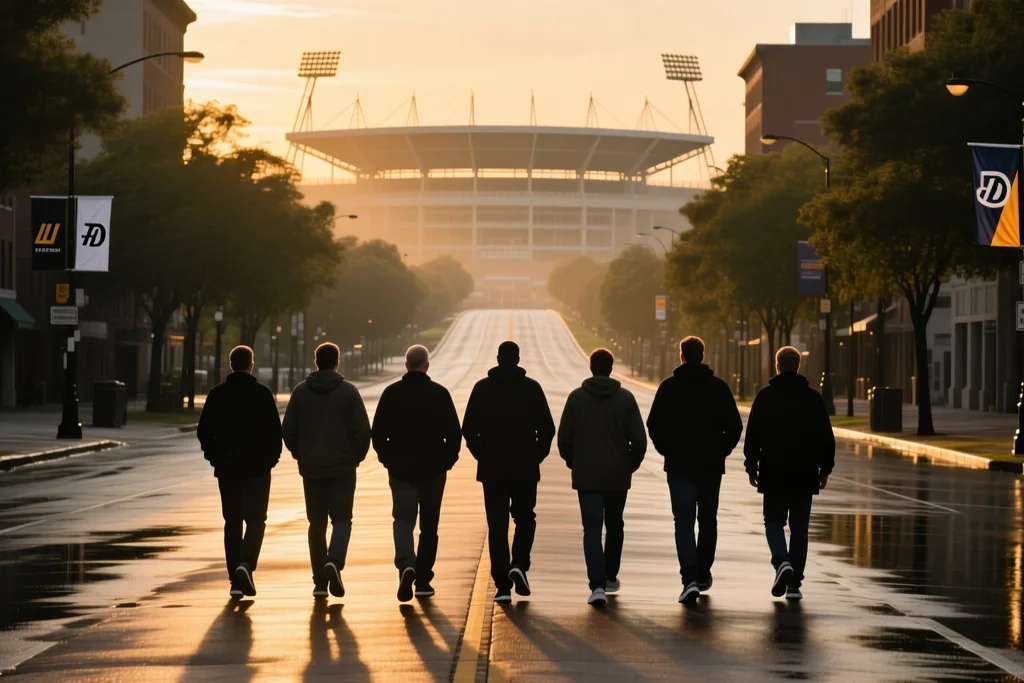
USMNT away days start long before the flight, with a ticket allocation that decides whether the trip happens at all. A few hundred travelling supporters in a stadium of forty thousand can still be heard clearly, because they are standing together and organised. Here is how the trips are planned and what the away end is worth.
Getting there is a project rather than a purchase. Away days at the international level involve ticket allocations, long-haul travel and a fixture date that can move, and the supporters who do it regularly have the process down to a routine.
Tickets come before flights
National team ticket allocations for away fixtures are distributed through supporter groups and membership schemes rather than general sale. That means joining, paying and confirming a place long before most people start looking at prices.
The allocation is also small. A few hundred places are normal for a competitive fixture abroad, and demand usually exceeds supply, which is why loyalty points and previous travel records decide who is offered a seat first.
Buying flights before securing a ticket is the most common mistake. Fixture dates and kickoff times can shift for broadcast reasons within weeks of the match, and a booking made too early is difficult to recover from.
Away days supporters: what the away end looks like
Travelling sections tend to be compact and organised. Flags and banners are brought in rolls, drums are carried through customs, and a capo usually emerges within minutes of the gates opening.
Because the group is small, the sound depends on participation. Everybody in the section is expected to join, and that expectation is the reason a few hundred people can produce more noise than a much larger home crowd spread across a stadium.
The atmosphere in the away end is also warmer than in most home sections. The same faces travel repeatedly, and people who have shared five airports and three borders in a year tend to know each other well.

USMNT travel schedule: planning a trip without wasting money
| Step | When | Why it matters |
|---|---|---|
| Join the supporter group | Months before | Access to the away allocation |
| Confirm the ticket | Once on sale | Everything else depends on it |
| Check the visa window | Six to eight weeks out | Some destinations need longer |
| Book flexible flights | Four to six weeks out | Kickoff times still move |
| Plan the city, not the itinerary | Final fortnight | Discussion sessions dominate the trip |
Supporters who follow that order rarely lose money. The one step people skip is the visa check, and a refused entry at short notice is the most expensive mistake available.
What makes an away day worth repeating
- Standing with the same group in a different country.
- Songs that are understood without a word of the local language.
- The walk to the stadium, which is often the best part of the day.
- Meeting supporters from other clubs who travelled for the same match.
- A result that justifies the trip, though that part is never guaranteed.
The result is genuinely secondary for most regular travellers. People keep going for the group and the trip, and a heavy defeat usually becomes the story that gets retold most often.
Home matches and the other end of the scale
A home international is a completely different experience. The crowd is far larger, the organisation comes from the federation rather than a group, and the atmosphere depends on how the home supporters section performs.
Much of the culture in that section came from the club game. The same people who organise club tifos and travel to away fixtures also organise in the national team sections, and the style of the crowd reflects that shared origin.
Travel logistics that catch people out
Squad rotation rules, stadium entry restrictions and local laws on what can be brought into a ground vary by country. Flags on poles are the most common item confiscated, because length limits differ and enforcement is inconsistent.
Arriving early is the reliable strategy. Gates at away sections open later than the main entrances, and a group that turns up ninety minutes before kickoff avoids the worst of the queue and the argument.
Why the away end matters to the team
Players talk about the away support constantly, and not as a formality. A small section that makes itself heard in a hostile stadium gives a team something to respond to, particularly when the home crowd is quiet.
That is why federations protect the allocation. A visible away section is worth more to a squad than a handful of extra seats sold to neutral supporters, and the policy reflects it.
The practical summary
Join a group, secure the ticket, then book. Travel light, expect the fixture to move, and plan to arrive a day earlier than you think you need to. Everything else tends to work itself out on the ground.
For a first trip, a home international is the better introduction, and the club matchday routine is close enough to give a useful rehearsal. Away days are best attempted once the basics are familiar.
Read next

US Soccer Supporters Culture: How the Crowds Work
American supporters sections are young, loud and deliberately organised. The capo stand, the drum line and the scarf are the three things that hold it together.
2026-09-24
Rivalries in American Soccer: What Drives Them
American soccer rivalries run on geography and repetition. The best ones have both, plus a playoff night that neither city has forgotten.
2026-09-06
MLS Supporters Groups and Tifos: How Displays Work
A tifo is weeks of unpaid work, a fire-safety conversation and about forty seconds of impact. The people who make them explain the process.
2026-08-31